Jan 16 / Ricky Tam

Life in the UK Test Anxiety: What Nobody Tells You About the Emotional Side

Introduction

The anxiety you feel about this test is real. It is not just about memorising historical dates or knowing which queen reigned when — it is about what this test represents. For many of us building a life in the UK, the Life in the UK test sits at the intersection of hope, uncertainty, and the deep human need to belong. If you are feeling overwhelmed, anxious, or even quietly panicked about this test, I want you to know: you are not alone, and these feelings are entirely valid.

A peaceful, sunlit desk with a cup of tea and a small handwritten note that says "Breathe", representing the emotional support needed for test anxiety.
Empty space, drag to resize

Why This Test Feels Different

Most tests in life have limited consequences. Fail a driving theory test, and you book again. Struggle with a professional certification, and you retake it next quarter. But the Life in the UK test carries emotional weight that goes far beyond its 24 multiple-choice questions.

For those of us going through the settlement process, this test is part of a larger journey towards permanence and security. It is tied to questions of identity: Do I belong here? Will I ever truly feel settled? What if I fail?

Moving to a new country means navigating change on every front — language, culture, career, even how you see yourself. I have been through those transitions myself. And I remember how the weight of "just one more hurdle" can feel heavier than it logically should.
Empty space, drag to resize

FREE RESOURCE 

Ready to start preparing?


Our 3-Day Starter Kit gives you:

Test format demystified

The most-tested British Values

Top 10 facts that appear in 80% of tests

Empty space, drag to resize

My Own Test Day: What Actually Happened

When I sat my own Life in the UK test, I had prepared thoroughly — working through my notes systematically, taking practice tests until I consistently scored well above the pass mark. I walked into the test centre feeling ready.

But then came the wait. Standing in the queue for verification, I noticed my heart rate climbing. That familiar flutter of nerves. The "what if" thoughts starting to circle.

So I did what I had practised: a few slow breaths, grounding myself in the present moment rather than spiralling into worst-case scenarios. By the time I entered the testing room, I felt settled. During the test itself, I read each question carefully, trusted my preparation, and took time to review my answers.

I passed. And more importantly, I learned something that day: calm is not about feeling no anxiety. It is about having tools to move through it.
Empty space, drag to resize

The Professional Who Still Felt Anxious

Here is what nobody tells you: your professional competence does not protect you from test anxiety. I had spent years working in digital learning and UX design, helping organisations build better educational experiences. I had navigated complex career transitions and challenging projects. Yet there I was, feeling genuinely nervous about a multiple-choice test.

The anxiety was not really about the content. It was about what failure would mean — or what I feared it would mean — for my sense of belonging in this country I was working to call home.

If you recognise this feeling, you are not weak or unprepared. You are human. And acknowledging this is the first step towards managing it.
Empty space, drag to resize

The Perfectionist Trap

If you are reading this article, you may well be someone who holds themselves to high standards. Perhaps you have been successful professionally. Perhaps you are used to excelling at things you set your mind to. And perhaps that same drive for excellence is now working against you.

The perfectionist trap looks like this: you study thoroughly, but no amount of preparation feels like enough. You take practice tests and focus on the questions you got wrong rather than the many you answered correctly. You imagine worst-case scenarios. You lie awake running through facts you might have forgotten.

This anxiety is exhausting. And ironically, it can undermine the very performance you are so worried about. Anxiety narrows our thinking, making it harder to recall information under pressure. The more anxious we become, the worse we perform, which increases our anxiety — a vicious cycle.

If nighttime overthinking is affecting your sleep and preparation, you may find our resources on managing 3am anxiety helpful: [INTERNAL LINK: hub-2-pillar-3am-anxiety].
Empty space, drag to resize

Finding Calm in Your Preparation

The goal is not to eliminate anxiety entirely — some nervousness is natural and can even sharpen your focus. The goal is to prevent anxiety from overwhelming you. Here are approaches that helped me and that research supports:

Reframe what the test measures

The goal is not to eliminate anxiety entirely — some nervousness is natural and can even sharpen your focus. The goal is to prevent anxiety from overwhelming you. Here are approaches that helped me and that research supports:

Set a "good enough" standard

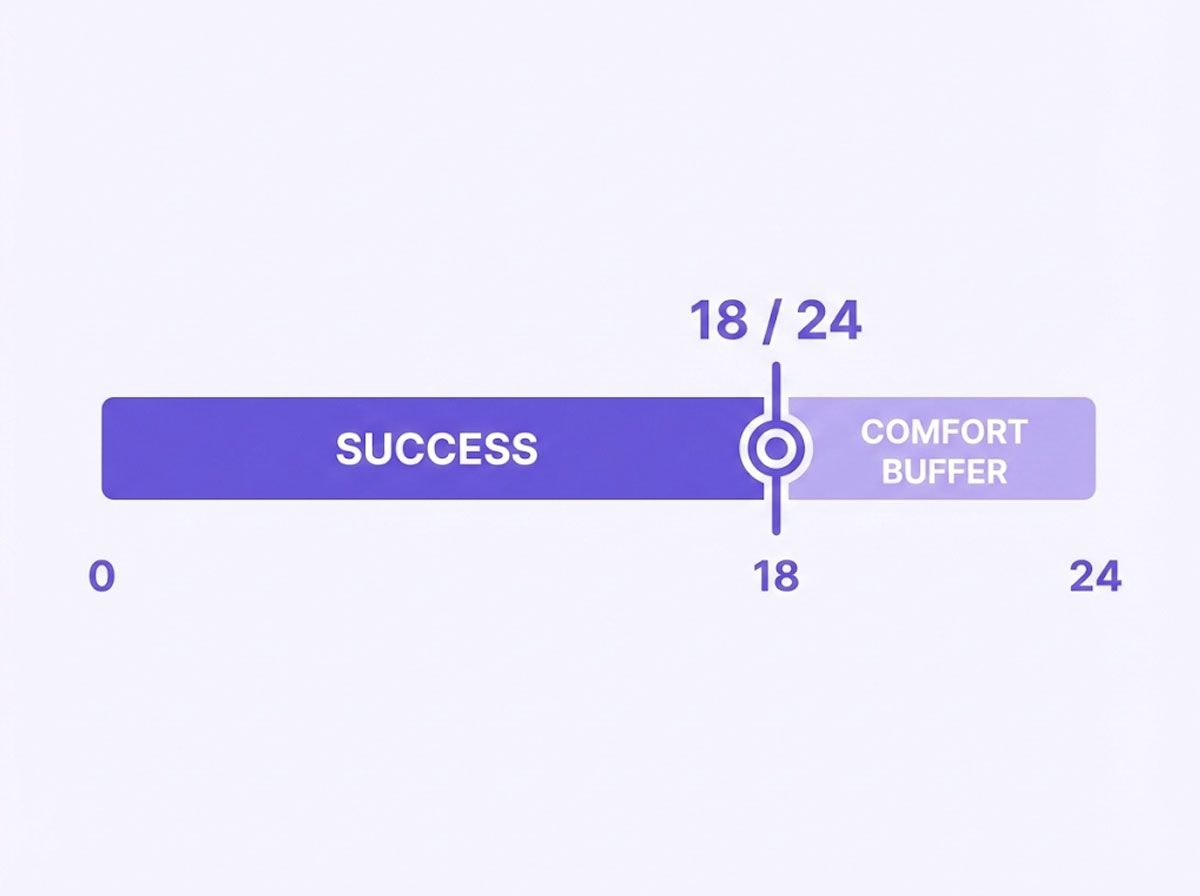
You need 18 out of 24 to pass — that is 75%. You do not need perfection. Aim to consistently score 20–22 in practice tests, then trust that you are ready. Continuing to study past this point often increases anxiety without improving results.
A minimalist infographic showing that a score of 18 out of 24 is a successful pass, helping to reduce perfectionist anxiety.

Use body-based techniques for acute anxiety

When anxiety spikes, your body responds physically. Simple techniques like slow breathing or a brief body scan can calm your nervous system. Even three minutes of focused breathing can shift your state significantly. This is exactly what I used in that test centre queue.

Calm Tip:
If you feel a panic spike during the test, take a 'sensory break.' Notice the texture of the mouse or the hum of the computer. This brings you back to the present moment without wasting significant test time.
A close-up of a person's hand resting calmly on a wooden desk next to a laptop, illustrating a physical grounding technique to manage test-day nerves.

Separate preparation from catastrophising

Studying your notes is useful. Imagining disaster scenarios is not. When you notice your mind spinning into "what if I fail" territory, gently redirect to practical action: review a topic, take a practice test, or step away for a break.
Empty space, drag to resize

Managing Anxiety on Test Day

Test-day anxiety peaks for most people in the hours before and the first few minutes of the test. Here is what helps:

Arrive early, but not too early

Fifteen to twenty minutes before your appointment gives time for check-in without excessive waiting. Sitting in a test centre lobby for an hour tends to amplify anxiety rather than reduce it.

Use the practice session

Before your timed test begins, you will have a brief practice session with sample questions. Use this time to settle in, get comfortable with the interface, and take some slow breaths.

Read questions carefully

Anxiety makes us rush. Force yourself to read each question completely, noting whether it asks for one answer or multiple answers. This prevents careless errors that have nothing to do with your knowledge.

Trust your preparation

If you have prepared systematically and consistently passed practice tests, you are ready. Your first instinct is usually correct. Second-guessing often introduces errors rather than preventing them.
Empty space, drag to resize

What Passing Really Means

When you pass — and with proper preparation, you will pass — you will receive your result immediately on screen. You will be given a unique reference number to use in your application. And then you will walk out of that test centre with one significant hurdle behind you.

But I want to be honest with you: passing the test may not immediately resolve the deeper questions of identity and belonging that often accompany major life transitions. Those questions take time to work through. What passing does do is remove one barrier, one uncertainty, one source of stress from your path. And that matters.
Empty space, drag to resize

You Are Not Alone in This

If there is one thing I want you to take from this article, it is this: the emotional weight of the Life in the UK test is real, it is shared by many, and it does not mean you are not ready.
Calm is not about feeling no anxiety. It is about having tools to move through it. And "good enough" really is the new perfect.
Empty space, drag to resize

Key Takeaway

The anxiety you feel about the Life in the UK test reflects the emotional weight of building a life in a new country. It is valid and shared by many. With calm, systematic preparation — and self-compassion — you can manage this anxiety and pass the test. The goal is not perfection. It is good enough.
Empty space, drag to resize

Resources for Your Journey

If anxiety is affecting your sleep, our free 3am Emergency Kit offers practical techniques for those dark, overthinking hours. For structured test preparation designed with calm in mind, the 20-Day Calm Sprint course guides you through the content without overwhelm — because you deserve to prepare without burning out.

Return to our comprehensive Life in the UK Test 2026 — The Complete Calm Guide for the complete overview, or explore our Life in the UK Test Study Plan for a structured approach to preparation.
Write your awesome label here.

FREE RESOURCE

Ready to start preparing?

Our 3-Day Starter Kit gives you:
Test format demystified
The most-tested British Values
Top 10 facts that appear in 80% of tests

About the creator

I'm Ricky — a digital learning experience designer with a background in UX and digital communications. Moving to a new country means navigating change on every front, and I've been through those transitions myself. I built this platform because I believe calm is a competitive advantage, and 'good enough' really is the new perfect. If you're preparing for the Life in the UK test while managing work and life, I know exactly what that feels like.

I know exactly what it's like to stare at 200+ pages of names, dates, and historical facts — wondering how anyone memorises all this while working full-time and managing real life.

The traditional approach felt all wrong to me: cram, panic, repeat. So I created something different.

This course is built on calm, structured learning — the same approach I used to pass first time. It respects your time, treats you like the capable adult you are, and focuses on what actually gets tested.

If I can pass calmly, so can you.

Ricky, creator — Embracing Imperfection Academy

Frequently Asked Questions

Is it normal to feel anxious about the Life in the UK test?

Yes, test anxiety is very common. The Life in the UK test carries emotional weight beyond its 24 questions — it represents a step towards settlement and belonging. Acknowledging this anxiety is the first step towards managing it effectively.

How can I manage anxiety before the Life in the UK test?

Effective strategies include: thorough preparation until you consistently score 83%+ in practice tests, breathing exercises to calm nerves, arriving at the test centre 15–20 minutes early (not too early), and trusting your preparation rather than cramming on test day.

What if I panic during the test?

If anxiety spikes during the test, pause and take a few slow breaths. You have 45 minutes, which is more than enough time. Read each question carefully, trust your first instinct, and move on if stuck — you can return to difficult questions later.

Will failing the test affect my visa application?

Failing does not negatively affect your visa status or application. It simply means you retake the test until you pass. Many people pass on their second or third attempt. A single failure is not recorded on your immigration file — only the eventual pass matters.

How do I know when I'm ready for the test?

You are ready when you consistently score 20–22 out of 24 (83–92%) across multiple different practice tests. This gives you a comfortable buffer above the 75% pass mark. Continuing to study beyond this point often increases anxiety without improving results.

References

Created with