Jan 15 / Ricky Tam

Life in the UK Test Topics: The Complete Breakdown

Introduction

You have decided to prepare for the Life in the UK test, but when you look at the official handbook, the sheer volume of content feels overwhelming. British history spanning thousands of years, government structures, cultural traditions, sporting achievements — where do you even begin? The good news is that understanding how the test content is organised can transform that mountain of information into a manageable, structured study plan.

A minimalist study desk with a hand-drawn mind map of Life in the UK test topics, the official handbook, and a cup of tea, illustrating organized test preparation.
Empty space, drag to resize

The Five Chapters at a Glance

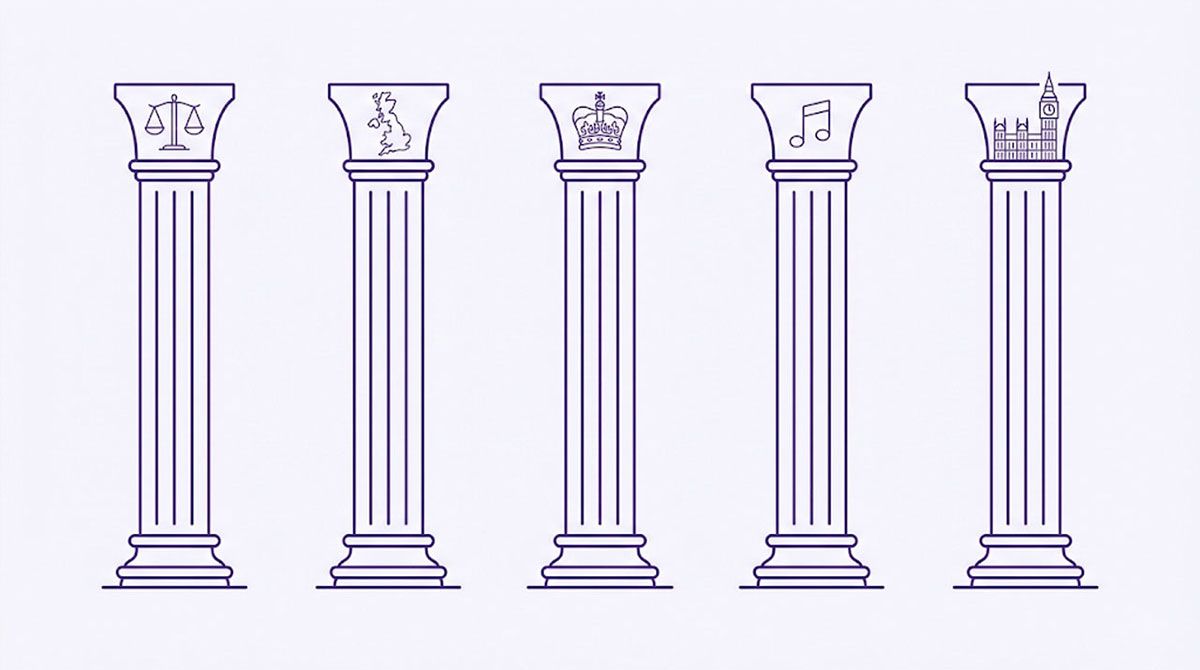
All 24 questions on the Life in the UK test are drawn from the official handbook, Life in the United Kingdom: A Guide for New Residents (3rd Edition). This handbook is divided into five main chapters, each covering distinct aspects of British life. Understanding this structure is your first step towards efficient preparation.
A minimalist illustration of five purple pillars representing the five main chapters of the Life in the UK test handbook.
Empty space, drag to resize

FREE RESOURCE 

Ready to start preparing?


Our 3-Day Starter Kit gives you:

Test format demystified

The most-tested British Values

Top 10 facts that appear in 80% of tests

Empty space, drag to resize

Chapter 1: The Values and Principles of the UK

This opening chapter establishes the foundational values that underpin British society. It covers fundamental British values including democracy, the rule of law, individual liberty, and mutual respect and tolerance for those with different faiths and beliefs. You will also learn about the responsibilities and freedoms of UK residents.

Study priority: High

Although this chapter is relatively short, its content frequently appears in the test. The questions tend to be straightforward if you understand the core principles, making this excellent territory for securing easy marks.
Empty space, drag to resize

Chapter 2: What is the UK?

This chapter explains the geography and structure of the United Kingdom. It distinguishes between the UK, Great Britain, and the British Isles. You will learn about the four nations (England, Scotland, Wales, and Northern Ireland), Crown Dependencies, and British Overseas Territories.

Study priority: Medium

This is a brief chapter with specific factual content. Questions from this section require precise knowledge — for example, knowing that the Channel Islands are Crown Dependencies, not part of the UK itself.
Empty space, drag to resize

Chapter 3: A Long and Illustrious History

This is by far the longest chapter in the handbook, spanning from the Stone Age to the present day. It covers early Britain (Romans, Anglo-Saxons, Vikings), the Middle Ages, Tudor and Stuart periods, the Industrial Revolution, the World Wars, and post-war Britain. Key figures, dates, and events are scattered throughout.

Study priority: Very High

History questions form a significant proportion of the test. The challenge is volume — there are hundreds of potential facts. Focus on major events (Magna Carta, the Battle of Hastings, key monarchs), significant dates, and notable figures. Many candidates find history the most demanding section.

Key tip:

Do not try to memorise everything. Focus on the facts that appear repeatedly in practice tests. Our Life in the UK Test Difficult Questions guide identifies the most commonly tested historical facts.
Empty space, drag to resize

Chapter 4: A Modern, Thriving Society

This chapter covers contemporary British life, including population and demographics, religion, customs and traditions, sports, arts and culture, and leisure activities. It includes information about British achievements in literature, music, film, architecture, and sport.

Study priority: High

Questions from this chapter often focus on cultural knowledge — famous British authors, notable sporting events (like Wimbledon), traditional celebrations, and significant artistic achievements. Many candidates find this chapter more engaging than the history section.
Empty space, drag to resize

Chapter 5: The UK Government, the Law and Your Role

The final chapter explains how the UK is governed. It covers the constitutional framework, Parliament (the House of Commons and House of Lords), devolved governments in Scotland, Wales, and Northern Ireland, the role of the monarchy, the legal system, and citizens' rights and responsibilities.

Study priority: High

Government and law questions appear regularly. Understanding how Parliament works, the voting system, and the structure of the legal system is essential. This chapter also covers practical information about daily life, such as driving, healthcare, and education.
Empty space, drag to resize

Topics Summary: What You Need to Know

Here is a practical overview of the major topic areas and their approximate weight in the test:
A priority-based infographic showing the study focus levels for different Life in the UK test chapters, from Very High to Medium priority.

🔴 Very High Priority
British History — Focus on key events, dates, and figures

🟠 High Priority
Government & Law — Understand structures, voting, rights
Culture & Traditions — Know festivals, sports, arts figures
Values & Principles — Short chapter, learn thoroughly

🟡 Medium Priority
Geography (What is the UK) — Brief but precise facts required

Empty space, drag to resize

How to Approach Your Study

Start with the shorter chapters

Chapters 1 and 2 are relatively brief and can be mastered quickly. Beginning here builds confidence and momentum before tackling the longer history chapter.

Use practice tests to identify weak areas

After an initial read of the handbook, take practice tests to discover which topics need more attention. Targeted revision is far more effective than re-reading the entire book.

Do not neglect modern society content

Some candidates focus heavily on history and government, only to be caught out by questions about sports, literature, or British traditions. Allocate study time across all chapters.
Empty space, drag to resize

Key Takeaway

The Life in the UK test covers five main topic areas, with history being the most extensive and commonly tested. Understanding this structure allows you to allocate your study time wisely, prioritising high-frequency content whilst ensuring coverage across all chapters.
Empty space, drag to resize

Your Next Steps

For a structured approach to covering all five chapters systematically, explore our 20-Day Calm Sprint course, which breaks down each topic into manageable daily sessions. If you are just beginning, our free 3-Day Starter Kit introduces effective study methods and helps you understand what to expect.
Return to our comprehensive Life in the UK Test 2026 — The Complete Calm Guide for the complete overview. You may also find our guides on Life in the UK Test Study Plan and Life in the UK Test Difficult Questions helpful as you plan your preparation.
Write your awesome label here.

FREE RESOURCE

Ready to start preparing?

Our 3-Day Starter Kit gives you:
Test format demystified
The most-tested British Values
Top 10 facts that appear in 80% of tests

About the creator

I'm Ricky — a digital learning experience designer with a background in UX and digital communications. Moving to a new country means navigating change on every front, and I've been through those transitions myself. I built this platform because I believe calm is a competitive advantage, and 'good enough' really is the new perfect. If you're preparing for the Life in the UK test while managing work and life, I know exactly what that feels like.

I know exactly what it's like to stare at 200+ pages of names, dates, and historical facts — wondering how anyone memorises all this while working full-time and managing real life.

The traditional approach felt all wrong to me: cram, panic, repeat. So I created something different.

This course is built on calm, structured learning — the same approach I used to pass first time. It respects your time, treats you like the capable adult you are, and focuses on what actually gets tested.

If I can pass calmly, so can you.

Ricky, creator — Embracing Imperfection Academy

Frequently Asked Questions

What topics are covered in the Life in the UK test?

The test covers five main areas: British values and principles, the structure of the UK, British history (from early times to present), modern society and culture, and government and law. History typically forms the largest portion of questions.

Which topic has the most questions on the Life in the UK test?

British history generally has the most questions, covering everything from Roman Britain to the present day. Key areas include medieval history, the Tudors, the Industrial Revolution, and the World Wars. Government and culture questions are also common.

Do I need to memorise dates for the Life in the UK test?

Yes, certain key dates appear frequently: 1066 (Battle of Hastings), 1215 (Magna Carta), 1588 (Spanish Armada), and others. However, you do not need to memorise every date — focus on major events and their significance rather than exhaustive chronology.

Are there questions about sports and culture?

Yes, the modern society chapter includes questions about British arts, literature, music, film, and sports. You may be asked about famous authors (e.g. Shakespeare), sporting events (e.g. Wimbledon, the Ashes), and cultural traditions.

What book should I study for the Life in the UK test?

The official handbook is "Life in the United Kingdom: A Guide for New Residents" (3rd Edition), published by The Stationery Office. All test questions are drawn from this book. While unofficial study guides exist, the official handbook is your primary and most reliable resource.

References

Created with