
Explore our Courses
Introduction
You have been studying diligently, working through the official handbook, taking practice tests — and yet certain questions keep catching you out. Perhaps it is the dates that blur together, the monarchs with identical names, or those frustrating questions where you must select two answers instead of one. You are not alone. Every Life in the UK test candidate has their difficult topics, and recognising yours is the first step to conquering them.
This guide addresses the question types and topics that trip up the most candidates. Understanding why these areas cause difficulty — and learning specific strategies to overcome them — can mean the difference between a comfortable pass and a stressful near-miss.
The History Problem: Too Many Dates, Too Many Names

Strategy: Focus on Anchor Dates
FREE RESOURCE
The Monarch Confusion: Henry, Edward, and Multiple Georges
Strategy: Learn Monarchs by Their Defining Events
Multi-Select Questions: The Hidden Trap
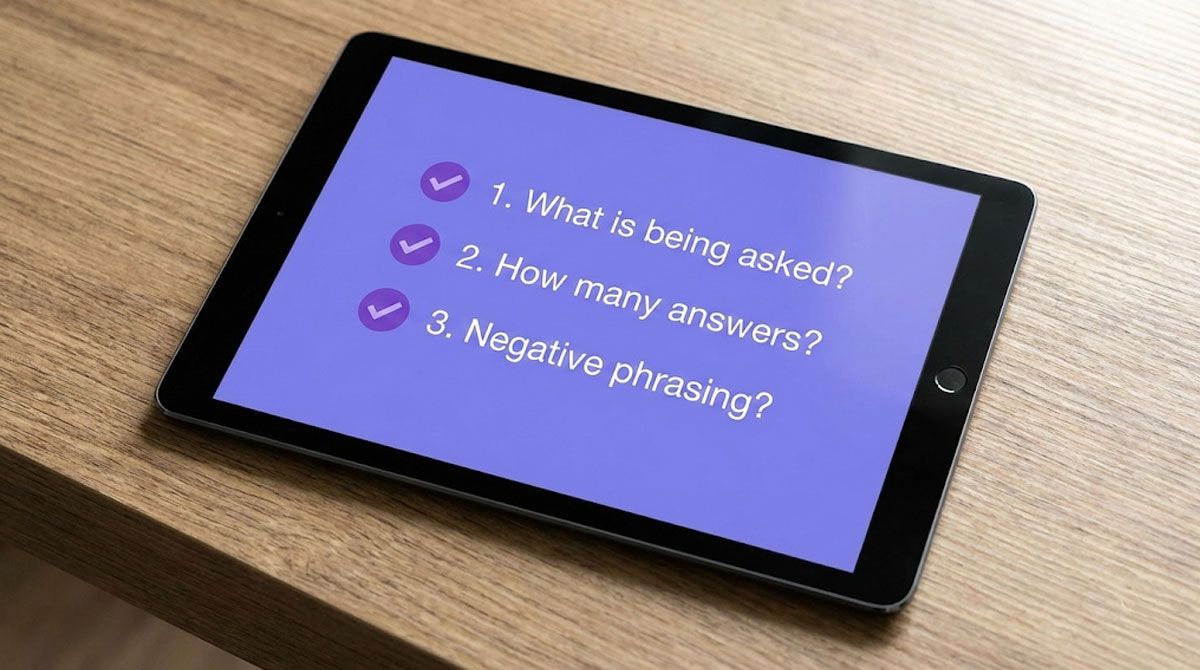
Strategy: The Three-Point Check
Negative Phrasing: The Careful Reading Challenge
Strategy: Highlight the Negative
Obscure Cultural Facts: Sports, Arts, and Traditions
Strategy: Create Category Lists
Practice Test Analysis: Finding Your Personal Weak Points

Strategy: Keep an Error Log
Test Day Strategies for Difficult Questions
Do not panic
Use elimination
Trust your first instinct
Manage your time
Key Takeaway
Your Next Step
Write your awesome label here.
FREE RESOURCE
Ready to start preparing?
Our 3-Day Starter Kit gives you:
✓ Test format demystified
✓ The most-tested British Values
✓ Top 10 facts that appear in 80% of tests
About the creator
I'm Ricky — a digital learning experience designer with a background in UX and digital communications. Moving to a new country means navigating change on every front, and I've been through those transitions myself. I built this platform because I believe calm is a competitive advantage, and 'good enough' really is the new perfect. If you're preparing for the Life in the UK test while managing work and life, I know exactly what that feels like.
I know exactly what it's like to stare at 200+ pages of names, dates, and historical facts — wondering how anyone memorises all this while working full-time and managing real life.
The traditional approach felt all wrong to me: cram, panic, repeat. So I created something different.
This course is built on calm, structured learning — the same approach I used to pass first time. It respects your time, treats you like the capable adult you are, and focuses on what actually gets tested.
If I can pass calmly, so can you.
Explore our Courses
Frequently Asked Questions
What are the hardest topics on the Life in the UK test?
History questions are typically the most challenging due to the volume of dates, names, and events. Common trouble areas include: distinguishing between similar dates (1066 vs 1086), multiple monarchs with the same name, and obscure cultural facts.
How do I remember all the dates for the test?
Focus on key dates that appear frequently: 1066 (Battle of Hastings), 1215 (Magna Carta), 1485 (Tudor era begins), 1588 (Spanish Armada). Use memory aids, create timelines, and take repeated practice tests to reinforce the most important dates.
What are multi-select questions?
Some questions ask you to select TWO or more correct answers. These trip up candidates who only select one answer or miss the less obvious second answer. No partial credit is given — you need all correct answers. Always check how many answers the question requires.
Are there trick questions on the Life in the UK test?
Not intentionally, but some questions use negative phrasing ("Which is NOT...") that requires careful reading. Candidates who rush may miss these. Read every question completely, note what is being asked, and do not assume you know the question from the first few words.
What if I don't know an answer during the test?
Make your best educated guess — there is no penalty for wrong answers, and leaving questions blank guarantees zero points. Eliminate obviously wrong options, trust your instinct on the remaining choices, and move on. You can flag questions to review if time permits.
References
- Home Office. (2026). Life in the United Kingdom: A Guide for New Residents (3rd Edition). TSO.
- Official Life in the UK Test Website. (2026). Priority Topics to Master.
https://www.officiallifeintheuk.co.uk/ - Roediger, H. L. & Butler, A. C. (2011). The critical role of retrieval practice in long-term retention. Trends in Cognitive Sciences. (Supports the "Error Log" and "Active Recall" strategies).
Created with